Tag Archives: WOTUS

Waters of the United States

The Science Behind the 2023 WOTUS Rule

No, regulation of the Waters of the United States (WOTUS) is not my favorite topic to write about, even though I’ve now completed seven posts on the subject.  The most I have written on any topic, because it has been and will ever be a never ending battle between the forces of science and the forces of development. Developers want to limit the application of Clean Water Act (CWA) regulations to “nonproductive” wetlands and upstream waters so they can infill them and use the land for houses, mines, agricultural fields, etc. Scientists though understand that the hydrologic cycle pretty much means every drop of water on earth is connected to every other drop of water and development in these supposedly disconnected wetlands and upstream waters will impact downstream waters considered to be WOTUS.

            Scientific investigations continue to confirm the scientists viewpoint, including the recent Technical Support Document (TSD) for the 2023 WOTUS Rule now on top of the ash heap of Supreme Court Decisions. See my post from earlier this year if you want to know more (Supreme Court Decision on Waters of the United States ).   I took up the TSD to see what new investigations have been conducted in support of the scientific viewpoint since the last great U.S Environmental Protection Agency (EPA) treatise on the subject in 2015 entitled “Connectivity of Streams and Wetlands to downstream Waters: A Review and Synthesis of the Scientific Evidence.”  Here’s a link to my post on the 2015 Report (A Review of the EPA’s Connectivity of Streams and Wetlands  ) if you want to do some catching up.

            It has been eight years now since the 2015 Report so let’s see what recent studies the 2023 TSD cites in support of the global connectivity of water.  EPA found 2,022 peer reviewed scientific papers published since 2015 relevant to the 2023 rulemaking.  Scientists have been busy.  Nothing spurs scientific investigation like a controversy and there was a lot of that after the 2015 Report was released.  The 2015 Report supported a widely unpopular WOTUS Rule regulating upstream waters and wetlands. The 2023 TSD documentation mirrors the earlier 2015 report.  It is divided into three areas of scientific investigation:

  • Ephemeral, intermittent and perennial streams
  • Floodplain wetlands and open waters
  • Non floodplain wetlands and open waters

The largest number of new investigations (986) concern ephemeral, intermittent and perennial streams.  There’s a reason for this.  It was the most controversial part of the 2015 regulation.  Ephemeral streams are those that flow only briefly usually as a result of localized rainfall.  Intermittent streams are those that flow seasonally.  Perennial streams have continuous flow.  It seems natural to most people that ephemeral and intermittent streams are not impacting downstream WOTUS much, but the people who live near these types of streams and are dependent on them think otherwise.  Many of these water bodies are in the western part of the U.S. and they are often important upstream waters for protecting downstream water quality.  When the Rule supported by the 2015 Report was pulled by the EPA, the first groups to sue were Indians tribes.  As a result many scientists wanted to investigate how these ephemeral and intermittent streams are acting as headwaters for downstream flows and water quality.  Ephemeral streams make up 48 percent of the stream length of all streams in the lower 48 states.  That’s a pretty big number.  The flow in ephemeral streams from precipitation events can have major effects on downstream waters due to abrupt increases in water that transport sediment, wood and other materials. 

Although their stream beds may visually appear dry, they still have water flow in the hyporheic zone (the stream bed lying below the surface.)  EPA cites Gallo and others in a 2020 study showing ephemeral and intermittent streams are providing valuable groundwater recharge from the hyporheic zone. Although ephemeral and intermittent streams might have observable flow only 1 to 82 % of the time, the presence of water in the hyporheic zone exists 4 to 33 times longer. 

Other studies cited by EPA include those of Covino and Magliozzi in 2018 showing ephemeral and intermittent steam without surface flow have complex and abundant hyporheic flow that maintain a downgradient hydrologic connection by supplying surface flows and maintaining habitat.

The second largest number of publications covered investigations of floodplain wetlands (660 scientific papers).  The 2015 Rule pretty much included all floodplain waters as being WOTUS. in its definition of what an adjacent covered wetland to a WOTUS is.  Of course that Rule was pulled in 2020 and the new rule that came in restricted what could be regulated as an adjacent wetland. 

Floodplain wetlands are actually part of stream and river systems with intricate connections, interactions and exchanges with them.  For example when river banks overflow during floods, floodplain wetlands serve as overflow storage.  Also there is a groundwater connection between a surface water body and it’s floodplain wetlands.

EPA cites a paper by Webb and others published in 2017 that shows how flood inundation of wetlands surrounding a surface water body contributes 72 to 76 percent of groundwater discharges to rivers. Simultaneously these inundated wetlands are being provided nutrient rich waters from the flooding stream systems.  It’s a sort of symbiotic relationship.  One can’t be disconnected from the other without impacts to both.  So if you infill a wetland, the flows that feed downstream surface waters are diminished and the nutrient sink that is the wetland is gone. Nutrients like nitrogen and phosphate are free to flow into surface waters where they can, as we all know, create a bunch of havoc.  In fact Gordon and others in 2020 showed that floodplain wetlands remove an average of 200 kilograms of nitrogen per hectare over a years time and 21 kilograms of phosphate.

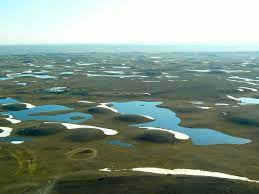
Non floodplain wetlands had the fewest number of scientific investigations at a disappointing 491 published papers   Non floodplain wetlands are often dismissed by just about everyone as unimportant and “nonproductive”. These are waters like prairie potholes.  The research that has been conducted since 2015 is pretty conclusive as to the connectivity of these isolated wetlands with WOTUS even if a great part of the connection is to keep surface runoff from reaching downstream waters. 

These non floodplain wetlands comprise 16 percent of all wetlands in the lower 48 states by areal extent.  A huge number still considering how many have been infilled for all types of development.  EPA cites a literature review by Lane and others of all studies of non flood plain wetlands.  Their paper shows these isolated waters are all interconnected in some way to river systems, either through storing storm waters so they aren’t washed along with a bunch of nutrients downstream or serving as a source of base flow of groundwater to rivers during dry periods.  Another study cited by EPA is that by Thorslund and others who conducted an investigation in 2018 using chloride tracers to study how non floodplain wetlands in Florida contribute surface water to downstream river and streams. The study showed nonfloodpain wetlands are a watershed scale source of flow for  90 percent of Florida’s headwater streams.

The TSD also cites Brooks and others who performed a similar trace study using isotopes in North Dakota. The researchers found significant amounts of water from isolated wetlands are providing water to downgradient perennial streams.  Rains and Cohen both published papers in 2016 showing how non floodplain wetlands can attenuate surface water flow and provide storage on a watershed scale that helps prevent devastating floods.

Also like the floodplain wetlands, studies have shown non floodplain wetlands to be a dramatic reducer of nitrates, phosphates and carbon.  Cheng and Basu in 2017 showed that 50 percent of nitrogen removal across all water bodies occurs in small wetlands and Evenson and others. in 2021 found through watershed modeling that restoring just 2 percent of non floodplain wetlands in the Upper Mississippi basin would result in a 12 percent nitrate reduction.  This would be an amazing achievement if it could be done to help eliminate the dead zone in the Gulf of Mexico caused by unchecked nutrients washing off farm lands into the Mississippi River.

So I guess I can say in summary that scientists have advanced the state of knowledge of how ephemeral and intermittent streams as well as non floodplain and floodplain wetland are connected to traditional downstream WOTUS.  EPA goes as far as to say that “after analyzing the abstracts of all 12,659 papers published since 2014, the evidence is conclusive that ephemeral, intermittent and perennial stream, floodplain wetland and non floodplain wetlands are hydrologically, chemically, biologically and functionally connected to downgradient waters.”  The EPA has also calculated the value of these type of headwaters through their benefits to society including fishing, hunting, boating, bird watching, religious uses, production of fuel, forage and fibers, extraction of materials for biofuels, food such as shellfish, and medical compounds.  The dollar value assigned to headwater streams is $15.7 Trillion annually and that calculated for non flood plain wetlands is $673 Billion annually.  This looks to me like a pretty significant economic contribution from a bunch of upstream waters that people have been dismissing as “non-productive”.

Waters of the United States 2023 Rendition

Albert Einstein once said that the definition of insanity is doing the same thing over and over again and expecting different results. In the last eight years there have been three rewrites of the definition of the Waters of the United States (WOTUS) under the Clean Water Act (CWA) by the U.S. Environmental Protection Agency (EPA) and its co-regulator The Department of the Army who administers part of the law through the U.S. Corps of Engineer (Corps.) For some history on the subject seek out my blog post at this link ( Environmental Protection Agency Announces Clean Water Act Rule.)

            The first rewrite was in 2015 and it was termed the “Clean Water Rule” but should have been titled the “Clear as Mud Rule” (see  Environmental Protection Agency Announces Clean Water Act Rule .) This was replaced in 2020 by the “Navigable Water Protection Rule” which should have been titled “The Do Anything You Want Rule” (see Waters of the United States  .) Now we have the new 2023 “Revised Definition of the Waters of the United States.” You could call this insanity or use my word for it – silly. The pre 1985 regulations were working just fine until in 2006 the Supreme Court – well known as an august scientific body – stepped in with a criticism of the process. Their beef was that they kept getting cases challenging the decision of the Corps on administration of the part of the law they are responsible for – the CWA 404 (d) rules regulating the disposal of materials into waters of the U.S. including wetlands.

            There is a long history of disputes through the court system on application of the CWA regulations and sometimes they reach the Supreme Court. This is what happens when you have a poorly written law, however no one wants to rewrite the CWA as these days that might result in wholesale slaughter of the Act or, so I was told a few years ago by senior officials at the Department of Justice. So now we get these silly continuous rewrites of the regulations.

            The 2023 rendition started out well as it purported to go back to the original 1985 regulations, but then the regulators decided wouldn’t it be just dandy if we include two different tests to determine if nearby wetlands or upstream tributaries to traditional (a)(1) WOTUS are WOTUS too.

The definition of (a)(1) waters is straight from the CWA:

Waters of the United States

(a) Waters which are:

            (i) Currently used, or were used in the past, or may be susceptible to use in interstate or             foreign commerce, including all waters which are subject to the ebb and flow of the tide;

            (ii) The territorial seas; or

            (iii) Interstate waters, including interstate wetlands

The two tests included in the new regulations are:

  1. the “relatively permanent standard,” and
  2. the “significant nexus” standard (which has been informally used for a number of years after a 2006 Supreme Court decision in which Chief Justice Kennedy wrote that this was the test an adjoining water body should pass to be considered a WOTUS.)

            The “relatively permanent standard” is a fairly understandable test whereby a wetland or upstream tributary will be considered a WOTUS if it is: “a relatively permanent, standing or continuously flowing waters connected to (a)(1) waters and waters with a continuous surface connection to relatively permanent waters.”       

            But what in the world is a significant nexus? The new rule defines it as tributaries or wetlands that “either alone or in combination with similarly situated waters in the region, significantly affect the chemical, physical, or biological integrity of waters identified in paragraph (a)(1) of this section.”

            This means if you want to develop a property within a tributary or wetland in a wide vicinity of one of these (a)(1) waters then CWA regulators must decide if the water on your property is affecting them. If the wetlands or small steams from your property are filtrating or reducing sediment, contaminants of other sorts, or harmful biological matter from the (a)(1) waters than you’re likely not going to be able to develop there. Or say the waters on your property provide for the extant water sources of (a)(1) water that support biological resources such as fish and the chain of biological organisms they feed on then you’re not going to be able to develop there either.

            Welcome to the water wars. They’ve been going on for over a hundred years in the U.S.  The wars are just getting larger due to increased population growth and consequent development. The current rewrite of the definition of WOTUS will do nothing to solve the legal challenges. It throws the problem back again on the regulators to make the decision of whether a particular property is a WOTUS or not, just as it always has been.

            There is already a challenge to the “significant nexus” standard as defined in the new regulation. The case of Sackett vs. the EPA was taken up by the Supreme Court in late 2022. In brief this is an old dispute dating back to 2007 where a property owner was attempting to infill a wetland for development and was stopped by the EPA for violating the CWA. That’s why I started this blog post with the definition of insanity. Depending on the Supreme Court decision, we may yet see another rewrite of the WOTUS regulations. You can probably tell by the tone of this blog post that I’m getting fed up with the whole issue but I’ll continue to update my readers on this ongoing silly saga.

Repeal of the Clean Water Rule

The Administrator of the U.S. Environmental Protection Agency (EPA) and the Assistant Secretary of Civil Works for the U.S. Army (essentially the Corps of Engineers since they implement portions of the Clean Water Act) signed a “Recodification of a Pre-existing Rule” on September 12, 2019.  According to the summary in the text, the Recodification “repeals” the Clean Water Rule of 2015.  I have written multiple times in this blog on the complicated regulatory and legal issues surrounding the Clean Water Rule of 2015.   For background check out these links: https://waterblogger.org/water-quantity/waters-of-the-united-states/

          The item being recodified is the definition of the “Waters of the United States” (WOTUS) under the Clean Water Act (CWA), or in simpler terms, what bodies of water are regulated under the Clean Water Act.  In a nutshell the Clean Water Rule of 2015 was seen by many states as a water grab by the federal government, because states have traditionally managed waters within their boundaries and the new definition expanded the water bodies covered by the CWA.

          However the definition of WOTUS which existed prior to the Clean Water Rule of 2015 was difficult to implement and a number of regulatory decisions made by federal agencies to include wetlands and water bodies adjacent to tributaries as WOTUS were appealed by landowners through the court system.  A couple of these cases reached the Supreme Court.  The Supreme Court directed the federal agencies to provide a resolution as to what bodies of water were WOTUS.  As a result the EPA rewrote the regulations and used a science based approach to do so.  The new regulations published in 2015 were dubbed The Clean Water Rule. 

          These rewritten regulations were a spectacular failure and since 2015 there has been an ocean of litigation.  Lawsuits were brought against the Clean Water Rule by a group of 28 states.  This litigation resulted in judgments that stopped implementation of the Rule in those states.  Those 28 states have been operating under the original regulations ever since.  The other 22 states have been operating under the new 2015 Clean Water regulations. 

          The purpose of the Recodification is to reinstate the original regulations which existed before the 2015 Clean Water Rule was implemented.  With the Recodification all 50 states will be operating under the original regulations – at least until whatever new litigation gets underway.  The Recodification text gives four reasons that support the repeal.

          First, a Supreme Court decision dictated that the EPA and the Corps of Engineers needed to define the limits of their authority to implement the CWA.   The 2015 Clean Water Rule failed to do so.  (A lot of states envisioned that the lack of a limitation could lead to every drop of water in the U.S. being subject to the CWA.)

          Second, the 2015 Clean Water Rule didn’t recognize, preserve, and protect the primary responsibility and rights of the states to manage their own land and resources.  (The western states and the big agricultural states jealously guard their right to manage water within their state boundaries so the Clean Water Rule, by expanding the federal government’s regulatory authority over water bodies, really riled them up.)

          Third, without any authorization from Congress the 2015 Clean Water Rule provided a regulatory framework that could have led to encroachment on the state’s land use planning authority.   (States were concerned about traditional state and local authority over land use activities like conversion of land for agricultural and other uses.)

          Lastly, the 2015 Clean Water Rule’s attempt to define the scope of a tributary or adjacent waters inclusion under the CWA resulted in some procedural errors and lacked adequate record support.  (Basically a couple of court cases said EPA didn’t meet the arbitrary and capricious standard under the Administrative Procedures Act.  It looked like the agency while writing the final regulations had just pulled a bunch of numbers out of a hat to define the distance a tributary or adjacent water had to be from a WOTUS to be included as a regulated water body.)

          The Recodification has not yet been published in the Federal Register so it is not yet being implemented.  It is also being called “Step 1.”  After the Recodification, “Step 2” will be implemented.  “Step 2” just happens to be a new Rule defining WOTUS.  This new rule published for comment in 2018 tries to simplify the definition of a “WOTUS” by making it a legal definition instead of a definition based on science.  A description of this new Rule can be found at this link: https://waterblogger.org/general-information/revised-rule-on-the-definition-of-waters-of-the-united-states/

          Stay tuned.  I’ll keep you up to date as the regulation winds its way through further trials and tribulations.