Tag Archives: selenium

Selenium in the Water Environment

For those of you who enjoyed my previous blog posts on selenium, here’s a little lagniappe for you on the behavior of selenium in the aquatic environment.  As I mentioned in an earlier post, selenium acts a lot like sulfur in that it combines with other elements and organic matter to form different species. (For an explanation of elemental species, here is a link to another post https://waterblogger.org/contaminants/the-mercury-cycle/). In surface waters with a lot of oxygen, you’ll most often find two mineral species called selenite and selanate, which are the result of the combination of selenium with oxygen. Algae and other floating microorganisms in the water are sucking up this stuff, turning it into organic forms of selenium and accumulating it within their teeny weenie little organic structures.


Down below the water, you’ll find a lot going on in the dynamic chemical environment of sediment. There’s lots of organic material in sediment with which selenium can combine to form organic selenium species. There are also lots of other elements like iron with which selenium species react. And there are all sorts of microorganisms tooling around looking for a snack. Under these varying conditions of chemical and biochemical activity, selenium is being converted from one selenium species to another.


For example, all those microorganisms chowing down on the selenium in sediment frequently methylate it, which forms organic selenium species. (Read the post at the above link, to find out what methylation is). Organic selenium species get processed right into the living structures of the tissues of animals like fish. According to the great compendium of the Toxicological Profile for Selenium published by the Agency for Toxic Substance and Disease Registry (ATSDR), these organic selenium species are similar to the organic sulfur ones used by living organisms in the production of amino acids. In fact, ATSDR says selenium substitutes for sulfur in amino acids. The names for these amino acids are selenocysteine and selenomethionine. Do you remember what amino acids are? They are the building blocks of protein. Protein supports the growth of tissue, muscles, and bones. Neither fish nor we could get along without protein.


So those are the mechanisms by which selenium in the aquatic environment enters the food chain. Basically all the little guys like algae and microorganisms that feed on selenium in the water and the sediment are eaten right up by insect larvae, larval fish, clams and mussels, and similar denizens of the aquatic world, which in turn are then eaten up by fish and birds. Voila, a perfect web for selenium poisoning.

Aquatic Life Freshwater Ambient Water Quality Criteria for Selenium

In my last post on Selenium Contamination

Selenium Contamination

I mentioned that the Environmental Protection Agency (EPA) issued a draft Aquatic Life Ambient Water Quality Criterion for Selenium in Freshwater in July 2015 (EPA 822-P-15-001). The final rule was published in the Federal Register in July 2016.  EPA has the authority to develop these type of criterion under section 304 (a) (1) of the Clean Water Act. The criteria laid out in EPA’s rule are not regulatory or enforceable until adopted by states as a water quality standard under section 303 (c) (2) of the Clean Water Act.


The complexity of how selenium behaves in the water environment had to be taken into account in developing the criterion. If you read my post on Selenium Contamination, you’ll know that the biggest problem with selenium is its chronic long term effects for egg laying animals. Just a tiny amount of selenium in water can get into the food chain through the algae and microbial organisms that live in water, then the invertebrates like insects, worms and so forth eat the algae and microorganisms, and they in turn are consumed by fish. Because fish don’t readily excrete selenium in urine or feces (yes, fish do poop in the water), it winds up in their tissues and it is unfortunately transferred to their offspring while they are being formed as tiny little embryos in eggs. The difference between what is an essential dietary need by fish for selenium and what is toxic to them is very small. Excess selenium ends up severely deforming the baby fish to the point they either don’t hatch or their deformities are so severe they don’t survive after hatching. The whole process of concentrating a contaminant up the food chain from microorganisms to fish and other animals is called bioaccumulation.


Selenium requires residency time in water for it to be bioaccumulated. Residency means it stays around in the water for a while. If you have constant low level selenium contamination going into a fast water creek or river, the velocity of that river moves much of the contaminant pretty quickly downstream, so selenium doesn’t have time to sit around and get ingested by a lot of microorganisms. Flowing waters are called lotic. Residency time increases when waters are still, like ponds, lakes and wetlands. The water with the selenium contamination stays around awhile and the microorganisms have plenty of time to suck it up and concentrate it. All the documented cases of selenium poisoning in fish have been in ponds, lakes and wetlands. Still waters are called lentic waters. Residency time is important because it takes awhile for the selenium to build up and concentrate through the food chain.


EPA had a tough time coming up with criterion for selenium in water because selenium toxicity depends on the food chain in a water body and if the water is moving or not. Usually scientists just do tank tests to determine water quality criterion. They’ll have one tank full of fish hanging around in contaminated water and another tank of fish, called the control, hanging around in nice clean water. The scientists generally use some abbreviated period of time like 30 days to determine what level of a particular contaminant knocks off the fish in the contaminated tank compared to the clean tank, because most water quality criterion are based on sudden death or acute toxicity not chronic long term toxicity like selenium. And they feed all the fish in the tanks nice clean fish food. There are no algae or invertebrates in the tanks concentrating the contaminant. So instead of doing tank tests, the EPA had to rely on data from laboratory and field studies. Fortunately there are a lot of studies out there, because selenium poisoning in fish has been a well known problem since the 1980’s. EPA was able to find data on a diversity of fish. Usually these studies require the use of a whole host of aquatic organisms, not just fish, because water quality is important to hosting an entire ecosystem, including fish, insects, floating crustaceans, and crawling crustaceans. But because the effects of selenium on fish are so well known and so severe, the EPA just used fish data in development of their criteria.


EPA looked at studies to determine what level of selenium in fish tissue and eggs caused toxicity. Then, because EPA had to come up with actual selenium water concentrations that are protective for a whole host of different fish, they got together with the U.S. Geological Survey and developed a model. It’s a complicated regression model, which the two federal agencies used to calculate actual concentration numbers protective of fish in both lotic and lentic waters if they weren’t exceeded in any 30-day period over the course of a year.


So, in the table below are EPA’s new Aquatic Life Ambient Water Quality Criterion for Selenium, which sets numerical criterion for selenium in fish tissue in eggs and ovaries and in whole fish or muscle and a monthly average water quality measurement for both moving water (lotic) and still water (lentic), as well as a calculation for determining a water quality criterion for intermittent exposure.


Summary of the Draft Freshwater Selenium Ambient Chronic Water Quality Criterion for Protection of Aquatic Life.

Media Type Fish Tissue Water Column3 Criterion
Criterion Element Element Egg/Ovary 1 Fish Whole Body or Muscle 2 Monthly Average Exposure Intermittent Exposure4

Magnitude

Magnitude 15.1 mg/kg 8.5 mg/kg whole body or  11.3 mg/kg muscle (skinless, boneless filet) 1.5 µg/L in lentic aquatic systems


3.1 µg/L in lotic aquatic systems


𝑾QC int =   𝑾QC 30 day𝑾C bkgrnd(𝟏−𝒇int )/ 𝒇int

Duration Instantaneous measurement5


Instantaneous measurement5


30 days Number of days/month with an elevated concentration
Frequency Never to be exceeded Never to be exceeded Not more than once in three years on average


Not more than once in three years on average


1. Fish tissue elements are expressed as steady-state.

2. Egg/Ovary supersedes any whole-body, muscle, or water column element when fish egg/ovary concentrations are measured.

3. Fish whole-body or muscle tissue supersedes water column element when both fish tissue and water concentrations are measured.

4. Water column values are based on dissolved total selenium in water and are derived from fish tissue values via bioaccumulation modeling. Water column values are the applicable criterion element in the absence of steady-state condition fish tissue data.

5. Where WQC30-day is the water column monthly element, for either a lentic or lotic waters; Cbkgrnd is the average background selenium concentration, and fint is the fraction of any 30-day period during which elevated selenium concentrations occur, with fint assigned a value ≥0.033 (corresponding to 1 day).

6. Fish tissue data provide instantaneous point measurements that reflect integrative accumulation of selenium over time and space in fish population(s) at a given site.


Wow right? This is a pretty complex set of criteria. It is made even more complex by EPA’s allowance for states to modify all of the criterion based on site specific conditions for the exact types of fish species in a particular area instead of the ones EPA used in the development of their numbers in this table. The numbers and methods are pretty significantly different from the 5 µg/L over 4 days that has been the standard since 1999. But it is also based on a more rigorous methodology.

Selenium Contamination

So many reports assessing environmental conditions erroneously list selenium under the category of heavy metals or toxic metals. Selenium is not a metal at all. On the periodic chart, it is actually located between sulfur and tellurium and is part of what is called the oxygen family. Chemically, selenium acts somewhat similar to sulfur in that it combines with a lot of metals. It is often found in metal sulfide ore deposits (for example at copper and zinc mines), which may be why a lot of environmental scientists and engineers group it in with heavy metals when they are assessing water or soil for environmental contaminants. Selenium has long been known to have environmental impacts on egg laying animals such as fish and birds, but in humans selenium toxicity is rarely seen.


I checked with the bible of references for toxicity: The Agency for Toxic Substance and Disease Registry’s (ATSDR) Toxicological Profile for Selenium. The reference was updated in 2003. The reference gives only a few cases of selenium toxicity, mostly from industrial chemical exposure. But there are two interesting cases in China of selenium toxicity due to long term ingestion of high levels of selenium in food. Crops in these areas of China were planted in soils with very high natural selenium content and as a result selenium became incorporated into the plants biological structure during growth. Common health effects seen by doctors examining the people who lived in these areas were brittle hair and deformed nails. Tooth loss and the loss of feeling and control of arm and legs in some people were also noted. There’s actually a name for the health effects of too much selenium in your diet. It is called selenosis. It’s found not just in humans but in other mammals as well.


The Toxicological Profile also noted health effects due to low selenium in people’s diets. In fact, there is a Recommended Daily Allowance (RDA) for selenium. If you take a one a day vitamin like I do, you can see selenium listed right on the label.
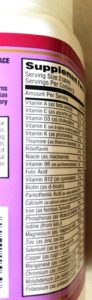
IMG_1476

The RDA is 0.055 milligrams per day. Selenium is a vital trace element for humans and animals, but can be harmful at levels greater than recommended. The ATSDR noted that ingesting 10 to 20 times the normal amount of selenium can result in selenosis. So there’s actually a fair amount of difference between what’s needed and what’s toxic. The average American is getting somewhere between 0.071 and 0.152 milligrams per day depending on where they live and what they are eating. You’d have to be getting 0.55 milligrams a day of selenium over an extended period to have any toxic effects. Unfortunately for birds the difference between the level of selenium essential for daily nutrition and a toxic amount is very small. Bird toxicity is often the main concern when you see high levels of selenium in water and fish. The well known results of selenium poisoning in birds are eggs that don’t hatch and deformed chicks. Both fish and birds pass the selenium they ingest to their eggs. Humans excrete most of the selenium they eat in their food. Excrete is the polite way of saying we pass it out through urine or feces. The ATSDR noted no human reproductive issues from selenium. In fact the RDA for selenium for pregnant and nursing women is actually a tiny bit higher than for other adults.


Selenium is everywhere. It can be found in rocks and soils all over the world at very low levels. However there are certain areas of the earth where the rocks and soils are enriched in selenium. A lot of these rocks formed back during the last days of the dinosaurs in the time period geologists call the Cretaceous. I suppose I shouldn’t say the last days of the dinosaurs, because those last days lasted for eighty million years – but hey dinosaurs were around for quite awhile before then. The Cretaceous was also when plate tectonics sort of arranged the world’s landmass in the shape, if not the position, of the familiar continents we know today. In the Late Cretaceous there were a lot of very shallow inland seas. Much of the midwestern and western parts of the United States were covered with these shallow water bodies and over the millennia they filled with rich marine organic rock and evaporite deposits. Evaporite deposits are rocks like gypsum, salt and phosphate. Organic rich rocks include oil shale and coal. Rocks formed in these shallow marine basins contain higher levels of selenium compared to other rocks. In the Cretaceous these shallow marine basins existed not only in the United States but also around the world. There are younger rocks formed under the same conditions that also have the same high selenium content; notably the phosphate rocks in southeast Idaho.


These rocks are the source of a lot of trouble for the fish and bird populations of the world. The problem was first noticed way back in the 1970’s at a place called Belews Lake in North Carolina. Belews is not a natural lake. It is a man made reservoir that is essentially a cooling basin for a power plant – a coal fired power plant. One of the sources of water to the reservoir was a fly ash settling pond. When you burn coal you get fly ash. It’s what’s left over after the organic content is burned to create electric energy. It looks a lot like the ash you get in the bottom of your grill after barbequing with charcoal, except charcoal is made from wood. Coal is essentially a rock with a lot of organic matter. You have all sorts of elements in coal that are rock like – silica, aluminum, iron, and calcium. You also have arsenic, cadmium, chromium, molybdenum, mercury and the subject of this blog post – selenium. Some of these elements go up the stack of the power plant as air pollutants but the majority is left behind in the fly ash.


There are lots of accounts of what happened at Belews Lake, but in my opinion, William Frankenberger and Richard Engberg did the best review of the incident in the 1998 publication: Environmental Chemistry of Selenium published by Marcel Dekker, Incorporated. According to their report, the water entering the reservoir from the fly ash settling pond contained 150 to 200 micrograms per liter (parts per billion) of selenium. Doesn’t sound like much does it? In fact, in Belews Lake itself the selenium concentrations in the water were on average only 10 micrograms per liter. But when wildlife scientists started looking at why fish populations were disappearing in the lake, they found up to 70 percent of the fish in the lake had reproductive abnormalities and 16 fish species once found in the lake were totally gone. By 1978 only four species of fish were left in the lake and when their tissues were analyzed for selenium, they were found to exceed 100 milligrams per kilogram (parts per million).  Instead of excreting the selenium, the fish were storing the selenium in their bodies and passing it on to their eggs. Were the fish drinking the water? Of course not, the selenium in the water was being taken up by algae and other microorganisms and entering the food chain, which for fish include a lot of insects, worms, and the like who thrive on algae and microorganisms. In upstream reaches of Belews Lake unaffected by the water from the fly ash pond, normal fish communities were found. There the water contained less than 5 micrograms per liter of selenium. Noting the difference, scientists could pretty much conclude selenium is not good for fish. This was such a notable account of poisoning of fish from low selenium concentrations in water that in 1987 the Environmental Protection Agency changed their selenium freshwater criteria for the protection of aquatic from 35 micrograms per liter to 5 micrograms per liter.


The other landmark environmental account of selenium poisoning is that of the Kesterson Reservoir in the San Joaquin Valley of California. People often speak with reverence about the studies conducted there and scientists talk about the Kesterson Syndrome. Messieurs Frankenberger and Engberg also describe the Kesterson studies in the Environmental Chemistry of Selenium. Remember those Cretaceous marine rocks I described earlier? There are a lot of those exposed at the surface in the San Joaquin Valley in California. I think all Americans know the San Joaquin as a fertile agricultural valley in California, but like all agriculture in the dry western states, they water the heck out of it. There is a lot of agricultural drainage as a result and back in the 1970’s the state of California got the idea to build large shallow impoundments to serve as evaporation basins for the drainage, which could also be managed as a wetland in order to benefit wildlife. Sounds like a win/win right? In fact it looked like it was going to work. The ponds at first received all sorts of good quality agricultural water and a large size marsh with thriving wetland plant communities was established. Wildlife populations began to flourish. Then the impoundments started receiving the saline subsurface drainage from the agricultural irrigation. By 1981 all of the flow into the impoundments was this saline drainage and by 1982 scientists started seeing deterioration of the wildlife in the marsh.


When scientists measured the amount of selenium discharging into the marsh from the irrigation drainage, the water averaged 300 micrograms per liter. The many different fish species that once populated the marsh were gone. The only species left were the mosquito fish which is known to tolerate pollution pretty well, but even they were suffering from reproductive abnormalities and unhatched eggs. Mosquito fish had as much as 120 milligrams per kilogram selenium in their body tissue. Eggs of water birds in the marsh were analyzed by scientists and ranged from 4 to 70 milligrams per kilogram selenium, depending on what type of bird egg it was. I think Kesterson is where scientists first recognized that even among birds there were variations in tolerance for selenium. Scientists checked nests for eggs that failed to hatch. In one count of 578 nests, 39 percent of eggs in the nests had one or more eggs that did not hatch. Up to 15 percent of the egg embryos examined had deformities. Now I was going to include a photo from a U.S. Geological Survey report on bird deformities due to selenium, but I know some of my readers are a little sensitive. So I’m just going to provide a link. If you get queasy looking at road kill, do not click on this link:  http://www.nwhc.usgs.gov/publications/field_manual/chapter_44.pdf .

Fortunately drainage to the Kesterson Reservoir was stopped in 1986.


There are dozens more examples of where low levels of selenium have resulted in environmental damage. There has been a lot of research on selenium since the incidence at Belews Lake and in July of 2015, the Environmental Protection Agency issued a draft proposal for further updating the selenium water quality criterion for protection of aquatic life.

Ocean Condition: Assessing the Fish

Questions, questions, there are always questions. The big question about my review of the Environmental Protection Agency’s (EPA) January 2016 “National Coastal Condition Assessment 2010” report was “how did the EPA determine the majority of coastal fish in the United States were in fair to poor condition?” My last blog post (if you didn’t catch it, here’s the link https://waterblogger.org/water-quality/ocean-condition/) said EPA rated the majority of fish in coastal waters as fair (26.4 % of fish) to poor (49 % of fish) due to the amount of selenium in the fish tissue. It is a fair question about what constitutes such a rating. So I went back to EPA’s technical report which provides all the methodologies for the data produced during the study. It was also released in January 2016, as a companion piece to the “National Coastal Condition Assessment 2010” report.

EPA has been using a standard process for examining toxicity in fish for the two decades they have been producing reports on coastal conditions. The method used examines the whole body tissue of a fish. When I used to work on ecological risk assessments, we referred to this method as the bassamatic. EPA of course refers to the process as homogenization. Basically you put the fish in a blender or other sort of grinder. I know this presents an unpleasant image, but it is important that your sample for analysis is going to represent what the wildlife out there is actually eating. My understanding is the fish are generally in a frozen state before they are blended and these are not your kitchen blenders anyway, as they typically have titanium blades to prevent laboratory contamination of the sample. Once the fish samples are prepared, they are tested for a number of natural contaminants, including selenium, mercury, cadmium, and arsenic. They are also analyzed for a number of persistent organic contaminates like the pesticides toxaphene, mirex, lindane, endrin, endosulfan, dieldren, DDT, and chlordane. They are also analyzed for other persistent organic contaminants hexachlorobenzene (a fungicide), heptachlorepoxide (a degradation compound of the pesticide heptachlor), and different molecular weight hydrocarbons. Persistent is “environment talk” for organic chemicals that don’t readily degrade and stick around causing endless problems. Fortunately most of these are no longer used in the United States.

Next EPA sorted through a multitude of scientific laboratory studies conducted to establish contaminant concentrations that pose risks to birds, mammals, and fish. There’s currently a huge body of scientific work in this area. EPA wrote the guidelines for conducting ecological risk assessments way back in the 1990s and scientists have been developing data on fatal and sub-lethal contaminant exposure to wildlife ever since. You know that old saying “Whatever kills you makes you stronger?” Well it is definitely not true in the world of toxic contaminants. Sub-lethal in the case of toxic contaminants can have a variety of very nasty consequences for wildlife. Here’s your word for today: teratogen. A teratogen halts or deforms the development of an embryo or fetus. This is a sub-lethal effect.

Environmental scientists don’t use the terms lethal and sub-lethal. They use the terms acute for lethal and chronic for sub-lethal. The concentration of a contaminant known to have a toxicological effect on a wildlife species is called the Toxicity Reference Value or TRV for short. Because nobody wants to have a toxicological effect on wildlife, scientists generally look at only the exposure concentrations that show no observed adverse effects (NOAEL) on wildlife or the low observed adverse effects (LOAEL) on wildlife.

For the national coastal study, EPA looked at a variety of wildlife that all eat fish and developed a generalized NOAEL and LOAEL for the contaminants analyzed. I’m going to use two of the contaminants for comparison: selenium and arsenic. Most people when they think of arsenic, they’re thinking poison, right? Well look at this:


Birds Marine Mammals Marine Fish


Selenium NOAEL 0.27 0.15 11.04
LOAEL 0.53 0.24 14.75


Arsenic NOAEL 3.39 0.08 0.06
LOAEL 8.51 0.4 0.3


The numbers you see are in milligrams per kilogram or parts per million (ppm). For a bird the low observed adverse effect of selenium is at 0.53 ppm, while the low observed adverse effect of arsenic is 8.51 ppm. Selenium has a more toxic effect on birds than arsenic does. Marine mammals also have a low TRV for both selenium and arsenic.

But remember now, EPA is examining the condition of the fish and what the toxic impacts are on the birds, mammals and fish that are eating them, not at what level a particular wildlife species starts having toxic effects. They had to calculate what amount of a contaminant in a fish would pose a risk to birds, marine mammals, and marine fish. So they got their fish tissue NOAEL and LOAEL for the toxic impacts by taking the TRV for wildlife species, multiplying it by the general body weight and dividing it by the general amount of fish ingested. Yes they really did this. I know it sounds complicated and frankly the whole process makes my head hurt, but they came up with some figures they could screen fish for and say whether they were in good, fair or poor condition.

Here are the selenium numbers EPA developed for their report:


Contaminant Bird Marine Mammal Marine Fish
Fish Tissue Fish Tissue Fish Tissue
NOAEL LOAEL NOAEL LOAEL NOAEL LOAEL
Selenium 0.29 0.57 259.68 428.48 11244.05 15016.72

These figures are again in milligrams per kilogram. Marine mammals like dolphins and seals and marine fish like tuna, shark and swordfish have larger body weights than birds so they can eat fish with a lot more selenium in them before they begin to have toxic effects. Birds also have a greater ingestion rate – they eat more just to keep their body weight up. I guess it takes more calories to fly than to swim around or walk.

So there you have it. EPA established their screening criteria for what constituted fair and poor fish quality based on the consumption of fish by birds.