
I have used the term biogeochemistry in several blog posts on nutrient pollution and have been asked to explain what this term means and what role biogeochemistry plays in nutrient pollution. Biogeochemistry is a mouth full, but if you dissect the word then you see that there are two prefixes attached to the noun chemistry – bio and geo. Bio is short for biology and geo for geology. Biochemistry refers to the chemical processes taking place within living things, for example the incorporation of nitrogen into a plant’s proteins and chlorophyll. Geochemistry on the other hand is the study of the chemistry of geological processes, such as, the behavior of nitrogen in water and soils. So biogeochemistry is the combination of the two.
To explain further, let’s follow through with the example of the biogeochemistry of nitrogen pollution. Did you know earth’s atmosphere is 78 % nitrogen? That’s good right? After all, living organisms on earth need nitrogen for use in daily metabolic functions. But plants including algae can’t directly use the nitrogen in the air. It’s kind of like that old maxim about the ocean – “water, water everywhere but not a drop to drink.” Nitrogen gas has to be converted into ammonia or nitrate in order for plants to be able to use it. Nitrogen fixation and nitrification are the primary processes of conversion.
Nitrogen fixation produces ammonia. The chief nitrogen fixers on the planet used to be bacteria. But of course now humans have gotten into the game. Nitrogen fixation occurs as a result of fossil fuels being burned in power plants and during combustion in car engines. The process called nitrification converts ammonia to nitrite and then on to nitrate. Nitrification is pretty much just carried out by single cell organisms like bacteria. Both nitrogen fixation and nitrification require oxygen.
These biogeochemical processes occur both in soils and in water. So in water bodies like lakes, rivers, estuaries and oceans, bacteria are busy converting unusable nitrogen into usable forms, which algae – just like terrestrial plants – can use to grow. There’s also another process called denitrification which is going on in soils and water that are oxygen deficient. A group of bacteria which prefer oxygenless environments are busy taking nitrate and converting it back to unusable nitrogen gas. The nitrogen gas formed by denitrification is then cycled back into soils and water where it is once again used in the nitrogen fixation and nitrification process. It’s just one perpetual do-loop and is called the “nitrogen cycle” by scientists.
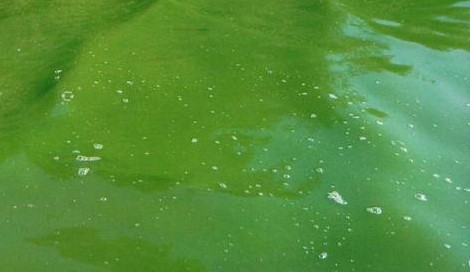
Of course the algae require other nutrients like phosphorous to grow and they depend on sunlight for photosynthesis, but in coastal waters and estuaries, the growth of algae is only limited by the availability of nitrogen. This is because these little algae guys need 16 times more nitrogen than phosphorous to grow and ocean waters are low in biologically usable nitrogen compared to phosphorous. It’s the exact opposite for freshwater lakes and streams. In general if you add a bunch of man-made forms of nitrogen from fossil fuel combustion, nitrogen fertilizers, farm animal manure, and human waste (from wastewater treatment plants) to estuarine and coastal waters then algae are going to thrive.
However there are all sorts of other biogeochemical interactions that can come into play which affect the availability of nitrogen compounds to algae in the water. Take phosphorous, it readily adsorbs onto sediments under normal oxygen conditions and is then not available to the algae floating around in the water. In this case, adding nitrogen to the water won’t result in excessive algae growth. However if a water body is lacking in oxygen then sediments will release adsorbed phosphorous back into the water. This is because adsorption of phosphorous in sediments is strongly dependent on the presence of iron – oxidized iron. Iron forms sulfide compounds in water bodies without oxygen. Phosphorous does not interact in the same way with iron sulfides in sediments as it does with iron oxides. Therefore in low oxygen zones, phosphorous is more available in the water to help algae prosper when there are sources of nitrogen pollution.
Iron is also needed by algae for photosynthesis. Iron is not very soluble in water so it has to combine with organic matter to be available to aquatic organisms. The amount of organic matter in low oxygen waters is higher than it is in water with normal oxygen levels, because well, a lot of things are dying down there in the no oxygen zone since most aquatic organisms need oxygen to survive. Increased iron is then available in the water to help algae grow.
Complicated right? And I haven’t even touched on the issue of silica and how it impacts the type of algae growing in a water body. The diversity of biogeochemical interactions within a water body is the reason why each one must be studied independently to determine how best to prevent nutrient pollution.