
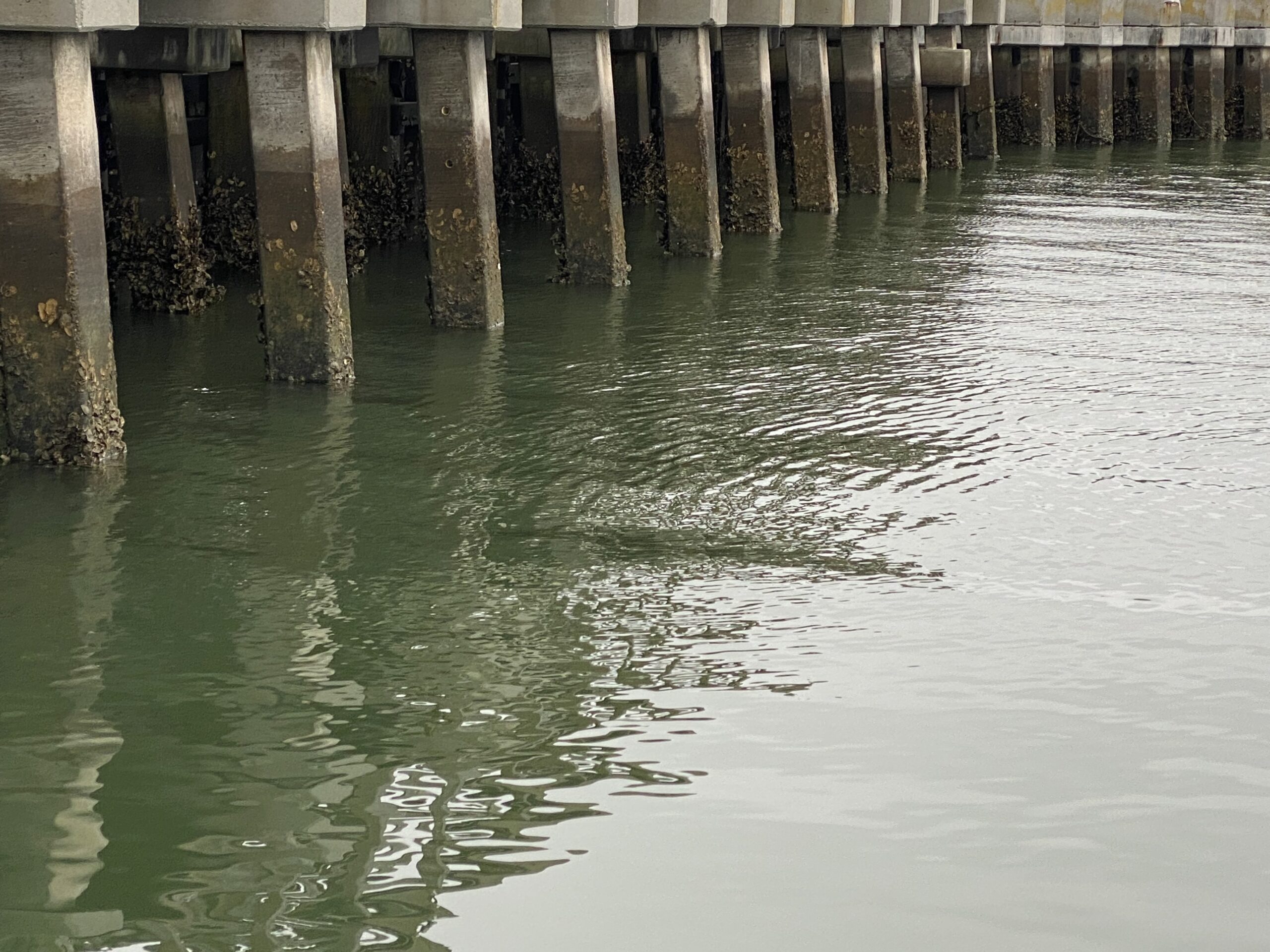
I read a story in the newspaper a few weeks ago about how the governor of Florida was visiting Miami in order to start the long process of providing protection from sea level rise to the low lying city. It was an interesting article; because in addressing the issues caused by sea level rise, like coastal inundation and flooding, he wouldn’t let the words climate change pass his lips even though the issues have expensive solutions like sea walls and drainage infrastructure. I’m not a political person but it seems strange to me that the guy won’t address the root cause of the problem and is only interested in temporary fixes. Sea level rise is becoming an acute problem all up and down the eastern seaboard of the U.S. wherever development has occurred along the coast. I live on an island where gauges to measure sea level have been installed to track the inevitable encroachment of the ocean. I’m afraid our community won’t exist in 50 years as no manner of temporary fixes will keep the island from disappearing.
Six years ago I wrote a blog post on the rising oceans (https://waterblogger.org/general-information/sea-level-rise-climate-change/ ). At the time scientists used satellite measurements to show there was a 0.03 inch yearly rise of sea level as the result of greenhouse gas emissions. Increased monitoring since then has produced a lot of new and better data, so let’s take a look at what the just released 2021 report from the United Nations International Panel on Climate Change Climate Change 2021: The Physical Science Basis has to say about sea level changes.
Here are the yearly sea level rises given in the 2021 report:
| Period | Average Rate of Sea Level Rise in Inches per Year |
| 1901 – 1971 | 0.05 |
| 1971 – 2006 | 0.075 |
| 2006 – 2018 | 0.15 |
What can we make of this new data? Simple math indicates that over the last 12 years of monitoring sea level has risen 1.8 inches and the total sea level rise from 1901 to 2018 is estimated at close to 7.9 inches. My last blog post based on the 2013 IPCC report on the physical science basis for climate change had an estimate of a 7.5 inch rise over the time period between 1901 and 2013. So we’re not talking about a huge increase in 8 years, but you can see from the table above that a continuous sea level rise is going on and that the rate of the rise is increasing on a yearly basis.
Why is sea level rising so quickly? Sure glaciers are melting and the Greenland Ice Sheet looks like swiss cheese because it has so many holes in it, but according to the 2021 IPCC report glacial melt has only caused about 41 % of the sea level rise between 1901 and 2018, although it is projected to increase as the loss of ice sheets is really beginning to take off and now accounts for 35 % of the sea level rise that has occurred between 2006 and 2018. The other reason for the sea level rising is simply good old fashioned thermal expansion. When you heat water, it expands. The 2021 IPCC report estimates thermal expansion is causing 38 % of sea level rise.
Other factors playing into higher sea levels are density and circulation changes in the ocean; however the 2021 IPCC report fails to quantify their contribution. I find it hard to believe because there are a multitude of other facts and figures given, but really the report just doesn’t say. There’s often a failure to communicate in the IPCC report caused chiefly by omissions like this one but also because so many different time periods and measurements are compared. It’s a hard slog to get through the whole report and garner any useful information. My literary critique aside, the changes caused by thermal expansion (thermosteric changes) and density changes from increased salinity (halosteric changes) are lumped together in the 2021 IPCC report as “steric sea level change.” These two changes actually should be working at cross purposes to each other, as greater density decreases volume whereas higher temperatures increase volume. I would take exception to how they are presented in the report, except in reality the halosteric changes are negligible.
So this is probably more complex than you ever thought and then to put even more of a spin on things (excuse the pun) sea level rise is not the same everywhere due to the earth’s rotation and gravity. In other words your sea level rise in Thailand is not going to be the same as it is in say New York City because water is sloshing around and mounding up differentially.
What is causing the sea level to rise is probably not as important as the projections in the 2021 IPCC report for future changes in sea level. The 2021 IPCC report provides two different calculations for future sea level rise: one projection is for the scenario of greenhouse gases being substantially reduced and the other is for a scenario where they continue to be emitted at high levels. Compared to the time period between 1995 and 2014 calculations show that in 2150 global mean sea level will rise by about 2 feet for the low emissions scenario and by 55 feet in the high emissions scenario. Unfortunately the world is now beyond the tipping point of totally eliminating sea level rise because heat in the surface of the ocean is slowly circulating into the deeper parts of the ocean and will be retained there, causing thermal expansion for thousands of years to come.