
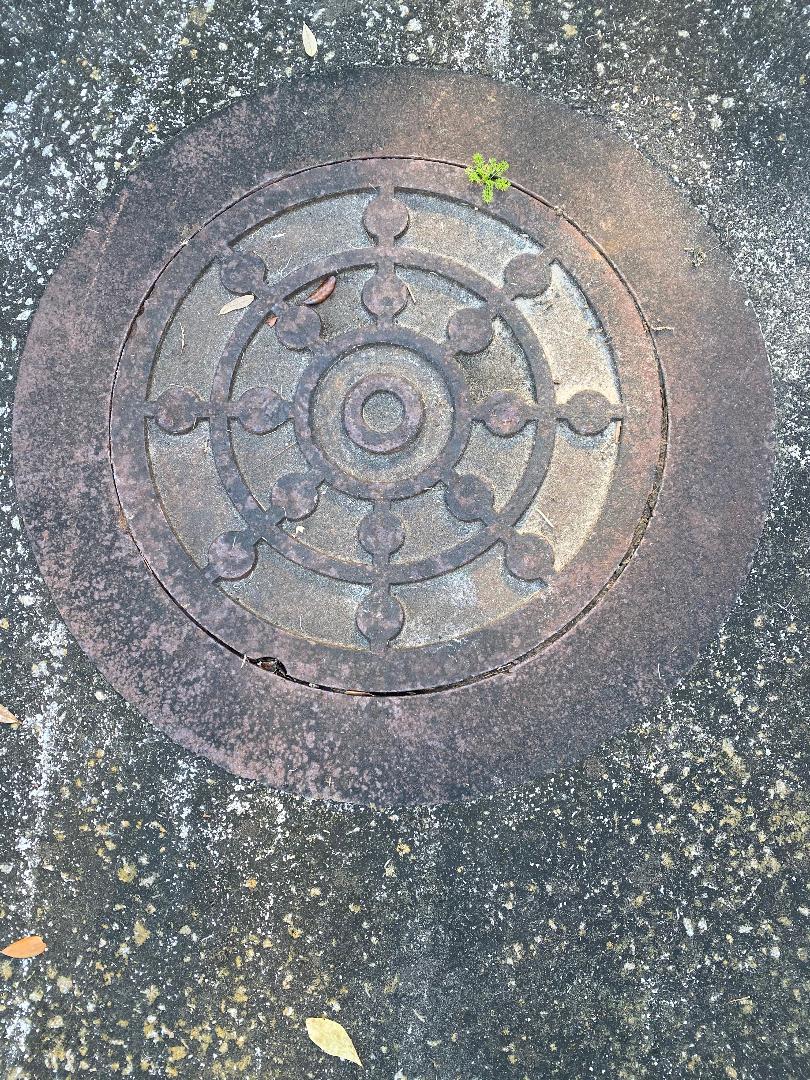
You drive over them all the time and never even notice except if they have been poorly installed or have subsided into the pavement and your car tire hits them with a thud. Manhole covers. They are ubiquitous in the urban environment and are covering up a multitude of sins. Below them lurks the city sewer system. You may have visions of sewers being filled with rats and roaches; no place that you plan to visit, just a reality of modern life. Most of the manholes are covering the storm sewers that drain a city of rainfall and snow melt. The storm sewers in a new suburb are not connected with the wastewater sewers that empty from your sinks and toilets, but in many of our older cities in the United States such as Washington, D.C. some of the storm sewers are combined with the wastewater sewers. I know you are thinking “Yuck” and me too. In Washington D.C., sixteen of these combined sewers flow directly into the Anacostia River during storm events with loads of e.coli and fecal coliform because of the lack of capacity at the wastewater treatment plant.
The uncombined sewers that simply deliver storm water to the Anacostia River are not benign either. Because of the wash of water during storm events and after snow melt, the sewers transport sediment washed from roads and green spaces like yards and parks, trash including glass and metal, and leaves and other organic detritus. The sediments contain the urbanized contaminants of the city. A type of urban contaminant you might find in storm sewers are Polychlorinated Aromatic Hydrocarbons (PAHs) that form as a result of incomplete combustion of fossil fuels in power plant emissions but also are emitted with car and truck exhaust. PAHs are components of asphalt and automobile tires as well. Simple tire wear on the streets of our nations and the existence of asphalt pavement results in a polluting source of contamination to our waterways. Polychlorinated Biphenyls (PCBs) are another urban contaminant. PCBs were used in all sorts of electrical equipment that supports a city’s electrical power grid: transformers, capacitors, voltage regulators, and switches. PCBs also were used in motor and hydraulic systems, insulation, oil based paint, and a whole host of other crazy stuff that are part of the urbanized environment. Long banned for use, they continue to persist in urbanized areas because they don’t degrade to any extent. Dioxins which are also formed from fossil fuel combustion, pesticides such as DDT and chlordane that once were widely used throughout cities for pest control, lead from bridges, corroding metal surfaces, paint, and old combustion of lead gas, arsenic from pesticides and fertilizer used to treat wood in outdoor decks and walkways, and mercury from combustion of coal and oil in power plants are all urban contaminants.
When storm water and snow melt clears the streets of a city, all of these urban contaminants flow into and through the sewer systems and discharge directly into our rivers. It is hard to tell in most cities to what extent urban living is contributing to the pollution of our waterways, because in addition to city contaminants there is also the contribution of pollutants from run-off at both old and new industrial sites. These industrial sites, if still operating, are often considered point sources of contamination under the Clean Water Act and not just from effluents that might be leaving the sites via pipes and culverts, but from storm water runoff at the property itself. Washington, D.C. though has no large scale industrial sites contributing to the Anacostia River; there are just a few old city landfills, a couple of power operators, and a few petroleum storage areas that are part of any city’s urban legacy. The few military bases are old, really old, (for example the Navy Yard was established in 1799) and they were not major industrial operations. So I was excited to see as part of the Anacostia River Program, which promises to make the water in the river fishable and swimmable, a study was being conducted on the contribution of upgradient sewer systems to the contaminated sediments at outfalls flowing into the river. Here was a chance to define to some extent what the contribution of contamination by the city itself is to the Anacostia River. I read eagerly through the “Manhole Sediment Investigation Report” completed back in December 2019.
Outfalls along the Anacostia were sampled for contaminants as part of an earlier study. Outfalls of the sewer system make little delta like formations where a pipe or culvert drains water into the river. Sediments from 16 of the combined sewer outfalls and 35 of the storm water only outfalls are considered contaminated. The idea of the study was to use manholes to collect sediments out of the sewers to assess the level of contamination being contributed to the river by upgradient sources. Washington D.C.’s Department of Environment and Energy wants to clean-up the contamination in the river to achieve its goal of making the river safe for swimmers and fishermen, but is concerned about possible continuing upgradient sources of contaminants that could re-pollute the river after the cleanup.
One hundred fifty seven manholes upstream of the contaminated outfalls were identified for inspection. Only 38 of the manholes were actually sampled for two primary reasons: 1) many of them could not be opened, and 2) many lacked enough sediment to be chemically analyzed. The lack of sediment in many of the sewers is not surprising because think of how storm events proceed. A good one washes the streets clean with a torrent of water which enters a storm drain aligned with a multitude of other storm drains and the rush of water down the sewer pipe and into the river is turbulent and almost violent. Everything is blasted out of the sewer including most of the sediment.
Here’s what the study concluded from the 38 samples taken. All sewers that discharge to the Anacostia are washing contaminants into the waterway. It wasn’t possible to directly correlate the levels of contaminants found in sediments taken from the sewers to those from the outfalls. This is because the sediments taken from the manholes contain a much lower level of organic carbon, clay and silt than the sediments at the outfalls. Such low levels are a result of the turbulent flow that carries the small particles, of which these types of sediments are composed, out of the sewer and into the waterway. Contaminants preferentially absorb onto organic carbon, silt, and clay. However, where manholes provided enough sediment for chemical analysis, they were found to contain notably higher levels of contaminants compared to the background of these contaminants in the river. Many of the contaminants from the sewers are 20 to 50 times higher than background in the river sediments.
Interestingly some of the highest levels of PCBs from the sewers were not where you would expect them to be – near the power generation sites – but are instead in the area upstream of the Washington Channel and Tidal Basin, where there are no known contaminated sites.
Because of the limited sampling, the study doesn’t provide an overall picture of how much the city is contributing to the pollution of the Anacostia River, but the results are alarming enough for the study participants to recommend further upstream manhole sediment sampling to see if the sources of the contamination in the sewers can be tracked down and identified – a difficult and expensive undertaking. It’s questionable as to whether individual sources could ever be found. Perhaps urban contaminants are so ubiquitous in a city that vast water management measures will need to be taken similar to the ones now being implemented on the Chesapeake Bay where wide land use issues are contributing to the nitrogen and phosphate pollution. In order to meet Clean Water standards, will cities in the future have to implement actions like rain gardens, green roofs, installation of pervious pavement, runoff controls, and water treatment at outfalls. I suspect this small manhole sediment study has opened the eyes of many environmental regulators tasked with keeping our rivers clean of pollutants. The study verifies that it is not just contaminated sites like landfills and power plants that are polluting our urban rivers; it is also the city itself.