
I thought a long time about the title of this post. At first I wanted to name it “Up in the Air” then I thought maybe “What Goes Up Must Come Down and Then Go Up Again”. But I stuck with the dull title of “The Mercury Cycle” because it is a clear presentation of how mercury acts in the environment. Everybody has heard of cycles: the cycle of life, the lifecycle of a product, lifecycle management, the lunar cycle. Well mercury has a cycle too. The mercury cycle is like a merry go round that never stops.
Before I write about the mercury cycle, I need to discuss metal species. Everybody has heard of species: plants have them, animals have them. We talk about the human species. Well metals have species too, but it is different. When scientists talk about metal species they are often talking about their oxidation state. We have to look back at our basic knowledge gained over the years, whether from a classroom or a Discovery channel special. You know everything is made up of atoms and those atoms are made up of electrons, protons and neutrons. You’ll maybe not remember but the electrons are the ones that are kind of special and exchange themselves to other atoms. Oxidation means that an atom is losing electrons. There is a complimentary process called reduction used to describe the other atom that is gaining the electrons. These exchanges go on at the molecular level too (remember molecules are a bunch of atoms). Mercury has only a few of these types of species. They include elemental mercury that hasn’t undergone any electron exchange and then the mercurous and mercuric forms of mercury which have lost electrons. Mercuric is the mercury that is most common. You will see it described as Hg (II). Hg is the periodic symbol for mercury by the way. People also talk about metal species when a metal bonds with another element. Again it is those crazy electrons who also share themselves between two elements. Mercury bonds with a lot of different elements, especially other metals. But when it comes to the mercury cycle, the species in which scientists are most interested are the ones where mercury bonds with sulfur and carbon. These mercury species are things like mercury sulfide and when you throw in a little hydrogen with some carbon you get your methylated mercury, including methylmercury, ethylmercury, dimethylmercury and so on. People refer to mercurous and mercuric forms of mercury and mercury sulfide as inorganic mercury. People refer to the methylated mercury as organic mercury.
Okay enough for basic chemistry. That is as far as I am going on that subject. It is a lot more complex but I wanted to tell you about metal species because they will play a role in the mercury cycle story.
The story begins with the release of mercury into the atmosphere. This can come from natural sources since mercury is everywhere in the environment to some extent. It is part of the earth. It is in our rocks and therefore our soils and when soils are eroded mercury goes into our streams and out to the oceans. So there is a natural occurrence of mercury in the environment. As mentioned in a previous post, mercury vaporizes at pretty low temperatures. Heat it up to like 357 degrees Centigrade and it boils. It has, I believe, the lowest boiling point for a metal. So natural mercury is being released to the atmosphere all the time, but at really, really low levels. Now add in your average human being who is interested in being warm in the winter, cool in the summer; who is in need of medical care; wants to put the trash out instead of letting it fill the house; and wants to be able to have nice white clothes and a safe drinking water supply free of bacteria. In other words, a person interested in living a modern existence. Now you start getting man-made sources of mercury in the atmosphere through the burning of coal, medical and trash incinerators, and chlor-alkali plants that are producing chlorine and other chemicals associated with the modern existence.
Mercury in the atmosphere is mostly in three forms: gaseous elemental mercury, the mercuric form, and particulates. The elemental form of mercury can be oxidized in the atmosphere, which results in even more of the mercuric form. Here’s the “what goes up must come down” portion of this post. Mercury comes down in the rain and snow. This is what is known as wet deposition. Mercury also just falls out of the air. Sure there is gravity involved but as usual it’s a lot more complicated. I’m not going into it, because I would have to explain Brownian motion and whole lot of other things. Just know that it is occurring and that it is called dry deposition.
The mercury falls on the ground and in the water. Mercury has a variety of things it can do. In the ground it can get tied up in the soil thanks to all that organic matter. Or it can run off into the water or percolate down into the groundwater. If the soil is eroded, mercury can enter surface water that way too. Or it can enter surface water directly through wet or dry deposition.
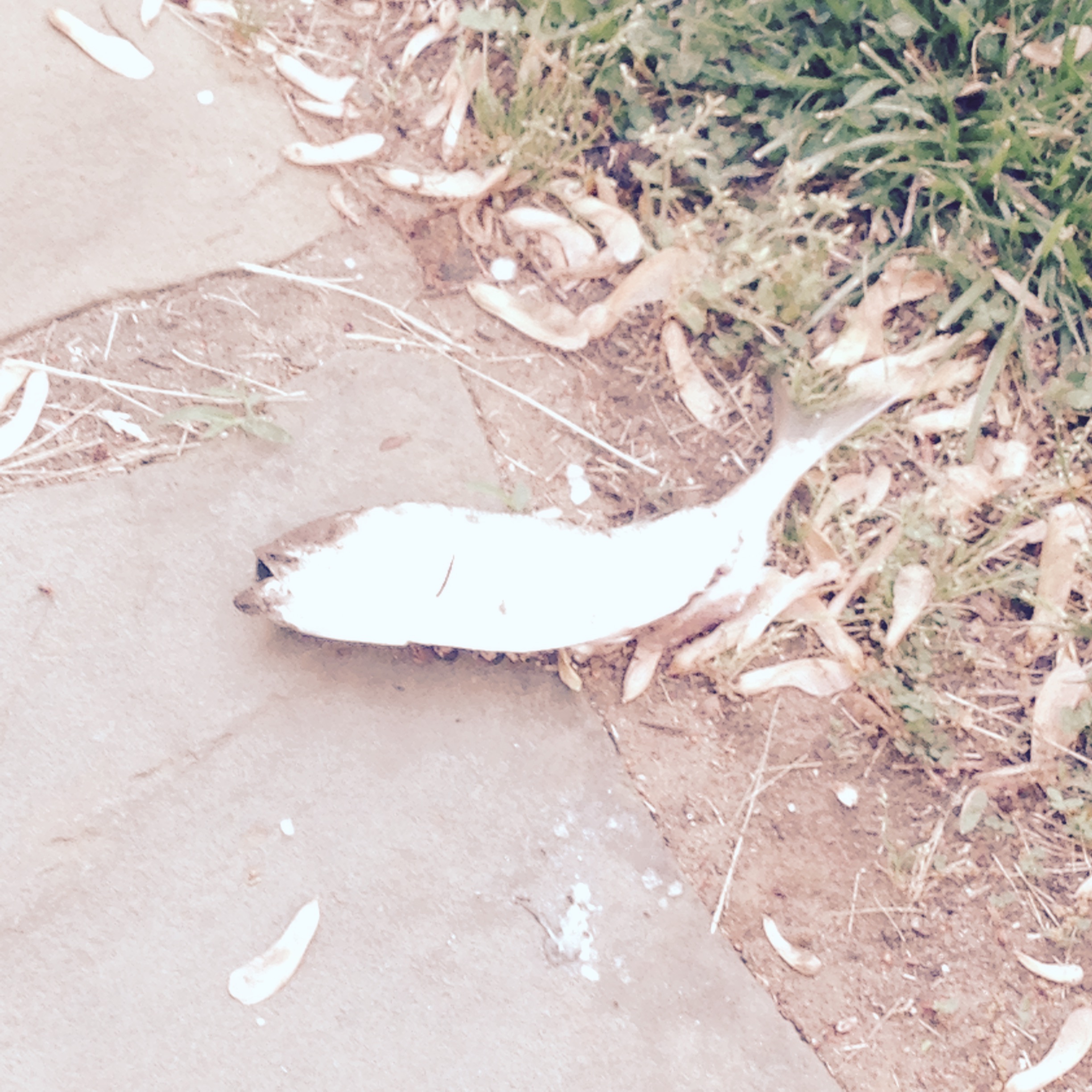
Now that mercury has entered the environment from man-made and natural sources it can immediately get back into the mercury cycle and return to the atmosphere, it can get frozen into a great big glacier, it can get all tied up with the organic material in soil, it can float around in the water (although mercury is not very soluble), or it can settle down in the sediment. When it settles down in the sediment, mercury can undergo methylation if the right conditions exist. The methylation process results in methylmercury. Remember methylmercury is the bad stuff. Methylmercury is taken up by algae and bacteria then ingested by invertebrates living down there in the gunk. Algae and invertebrates are eaten by fish. Methylmercury is accumulated in fish tissue. Birds, animals and people eat fish. Not all birds, animals and people, but osprey, eagles, minks, otters and people along the coasts and lakes are usually chowing down on them. Hey I found a fish in my back yard that an osprey must have dropped! The ants were eating it, so you could probably include insects too.
There has been a lot of research going on in the past few years on how methylmercury is formed in the environment, but one of the interesting things I have read about is that methylation and demethylation can be going on in the same water body. So mercury is not tied up for all time as methylmecury but can get right back into the mercury cycle.
Now you have the low down on the mercury cycle – not a like a uni-cycle or a motorcycle – but a cycle that needs balance none the less. If humans continue to add to the mercury cycle, there could be a terrible wreck.